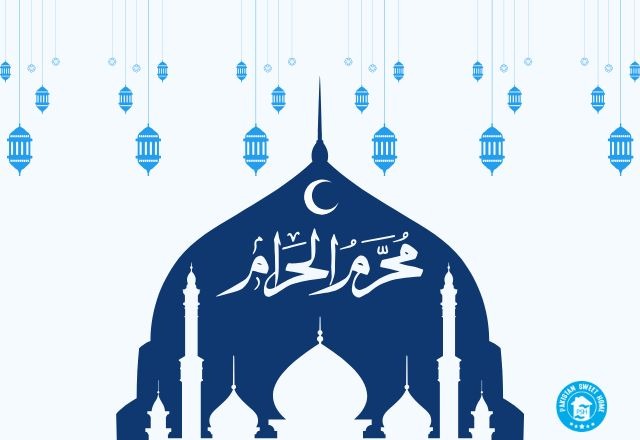
Rabi Al-Awwal is the third month of the Islamic lunar calendar.
In Arabic, "Rabbi" means spring and "al-Awwal" means first, so "Rabi al-Awwal" translates to "The First Spring."
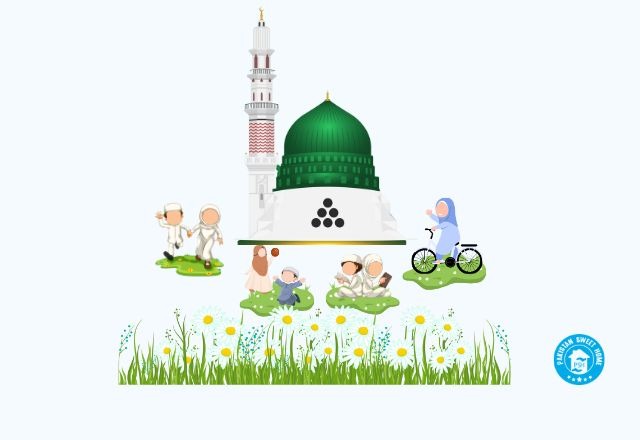
Rabi al-Awwal holds immense importance in Islamic history as it marks the birth of the Holy Prophet Muhammad (peace be upon him). This is an event considered one of the most remarkable in human history.
Let's learn about the history and importance of Rabi al Awwal and what Muslims should do during this holy month.
History of Rabi al-Awwal
In Rabi al-Awwal, the Prophet Muhammad (peace be upon him) and his friend Abu Bakr moved from Makkah to Yathrib. This is an event known as the Hijrah.
This pivotal moment marks the start of the Islamic calendar, with the first year spent in Madinah being the beginning of the Islamic era, denoted as ‘AH’ for ‘After Hijrah’.
As Umar (may Allah be pleased with him) remarked,
“The Hijrah has distinguished truth from falsehood, so use it as a reference for dating”
(Ibn Hajar al-Asqalani)
The Hijrah signified the dawn of a new era for Muslims. The Prophet (peace be upon him) united the tribes of Yathrib with justice, wisdom, and mercy. He (peace be upon him) transformed the city into ‘Madinah al-Munawarah’, the Illuminated City, now known as Madinah.
Many scholars believe that in addition to celebrating the birth of our beloved Prophet (peace be upon him), he also passed away during the month of Rabi al-Awwal. His passing occurred in the 10th year of Hijrah, after a period of illness.
Importance of Rabi al-Awwal
Rabi al-Awwal is not a month of obligatory fasting or specific prayers like Ramadan or Dhul Hijjah. However, it stands out due to its profound significance in Islamic history.
Rabi al-Awwal is a time for us to reflect on and appreciate the divine mercy of the Prophet (peace be upon him).
The Qur’an emphasizes this divine favor:
“Indeed Allah conferred a great favour on the believers when He sent among them a Messenger from themselves, reciting unto them His verses, purifying them, and instructing them in the Book (Qur’an) and Al-Hikmah (the wisdom and the Sunnah of the Prophet (peace be upon him)), while before that they had been in manifest error.”
(Qur’an, 3:164)
Thus, Rabi al-Awwal is a precious time to deepen our adherence to the Prophet’s Sunnah. It's a special time to reflect on the invaluable guidance we have been granted.
The Prophet’s (Peace be Upon Him) Birth
The Messenger of Allah (SAW) was born an orphan in Makkah in the year 570 CE. It is described by Allah (SWT) as a mercy to the world:
“It was only as a mercy that We sent you (Prophet) to all people.”
(Qur’an, 21:107)
Prophet Muhammad (peace be upon him) was born on a Monday, though there is some debate over the exact date. Some believe it was the 12th of Rabi al-Awwal, while others say the 17th. This is one reason why fasting on Mondays is Sunnah.
When asked about fasting on this day, the Prophet (peace be upon him) said,
"I was born on it, and on it, the revelation was sent down to me."
(Sahih al-Muslim)
Miracles of The Prophet’s (Peace be Upon Him) Birth
His (peace be upon him) mother, Aaminah, experienced a radiant light within her while pregnant with him.
Additionally, the Prophet's (peace be upon him) wet nurse, Halima Sa’diyah, was blessed for years after nursing him. Her frail donkey became faster and stronger, and her goat produced more milk than usual, sustaining her entire family.
These events highlight the importance of learning more about the Prophet (peace be upon him), his birth, and his character. By doing so, we can strive to emulate his exemplary qualities and behavior.
Prophet Muhammad (S.A.W.) sends letters to foreign kings inviting them to Islam
Battle of Khaybar
630
Conquest of Makkah
Prophet Muhammad (S.A.W.) performs Umrah
Tabuk expedition
631
Prophet Muhammad (S.A.W.) performs the Farewell Pilgrimage (Hajj)
632
Death of Prophet Muhammad (S.A.W.) and burial in Madinah
Note: The dates for some incidents may vary by one year according to different historians. The table shows important events in the Prophet's life, but it does not include many other significant events.
The Prophet’s (Peace be Upon Him) Death
The Prophet (peace be upon him) passed away in the month of Rabi al-Awwal, in the 11th year of Islam. Though His (PBUH) family knew He was nearing the end after being ill for several days. His (PBUH) passing left the Muslims in deep shock, with Umar (RA) initially refusing to believe it.
Abu Bakr (RA) then addressed the people, saying,
“O people! If it was Muhammad whom you worshiped, then know that he is dead. But if it is Allah (SWT) whom you worship, then know that He does not die.”
He reminded the Muslims that the Prophet Muhammad (peace be upon him) was a Messenger of Allah (SWT) and urged them to keep their faith strong by worshiping Allah (peace be upon him) alone.
Virtues of Rabi al-Awwal
The life and teachings of Prophet Muhammad (peace be upon him) have bestowed upon us countless virtues. Rabi al-Awwal offers a valuable chance to reflect on and learn from the lessons of His (PBUH) extraordinary life.
One of the greatest honors of our Prophet (peace be upon him) is that He (PBUH) is the final Prophet (A.S), and no prophet will come after him. Muhammad (peace be upon him) will be the Prophet for all of humanity until the end of time.
As Allah says in the Quran:
“…. He (peace be upon him) is the Messenger of Allah and the last (end) of the Prophets. And Allah is Ever All Aware of everything.”
(Surah Ahzab 33:40)
Prophet Muhammad (peace be upon him) exemplifies perfection and serves as the ultimate role model chosen by Allah. Following His (PBUH) Sunnah guides us toward an exemplary lifestyle that is beneficial for all humanity. It's not just in religious terms but in practical ways as well.
Allah says in the Quran:
“Indeed in the Messenger of Allah (Muhammad S.A.W.) you have a good example to follow for him who hopes in (the Meeting with) Allah and the Last Day and remembers Allah much.”
(Surah Ahzab 33:21)
Concept of Eid Milad-un-Nabi
Many Muslims believe that the Holy Prophet (peace be upon him) was born in the month of Rabi ul Awal, though there is no agreement on the exact date.
In regions such as Europe, the USA, Canada, South East Asia, India, Pakistan, and Bangladesh, A Muslim sect celebrates 12 Rabi al-Awal as the birthday of the Prophet (peace be upon him), known as ‘Eid Milad un Nabi.’
They celebrated this day with enthusiasm through activities like praising the Prophet with poetry, holding processions, and lighting up mosques.
In the Middle East and nearby countries, Muslims do not celebrate the event on 12 Rabi al-Awal or any day that month. This is because the Prophet Muhammad (peace be upon him) and His companions did not celebrate their birthdays or those of other Prophets.
Thus, practices surrounding Milad un Nabi vary, with some Muslims observing the day and others not.
In conclusion, Rabi al-Awwal is a month of profound significance in Islamic history. It marks both the birth and the passing of the Prophet Muhammad (peace be upon him). The Hijrah, occurring in Rabi al-Awwal, marks the start of the Islamic calendar and a new era of unity and justice.
A group of Muslims celebrate the birth of the Holy Prophet (peace be upon him) with great enthusiasm, while others do not. Rabi al-Awwal thus stands as a time for renewing faith and honoring the legacy of a leader who profoundly shaped the course of Islamic history.
Pakistan Sweet Home stands as a powerful example of what dedicated orphan care should look like in today’s world. It combines vocational training, extracurricular activities, and moral education into everyday life. This well-rounded care ensures that children grow not only with love but also with the skills to lead independent and meaningful lives.
Ali Raza holds a Master of Arts in Islamic Studies and is an expert in Islamic theology and jurisprudence. Specializing in Zakat, Sadaqah, and other Islamic donations, Ali's writings provide valuable insights into the religious and ethical aspects of charity. His work for Pakistan Sweet Homes aims to educate and inspire readers to support orphan care and charitable initiatives, making him a key contributor to the organization's mission.