Before he was a leader, Prophet Muhammad (PBUH) was an orphan.
His early years were shaped by profound loss, resilience, and divine care, laying the foundation for a life of truth, justice, and mercy. These early experiences were not just personal trials, but powerful signs of his future greatness.
Let’s explore the early life of Prophet Muhammad (PBUH) and the remarkable experiences that shaped his character and mission.
Birth and Family Background
In the 6th century CE, in Rabi al-Awwal, in the town of Makkah nestled within the desert plateau of Western Arabia, a boy named Muhammad was born — a child destined to transform the world.
He was born in 570 CE into the respected tribe of Quraysh. His father, Abdullah bin Abdul Muttalib, passed away before his birth, leaving his mother, Amina bint Wahb, to care for him alone. This marked the beginning of a life shaped by both hardship and divine protection.
His name, Muhammad, comes from the Arabic root “Hamada,” meaning “to praise” or “to glorify.” Lineage-wise, he belonged to the noble house of Ishmael, son of Prophet Abraham (AS), tracing back nearly forty generations.
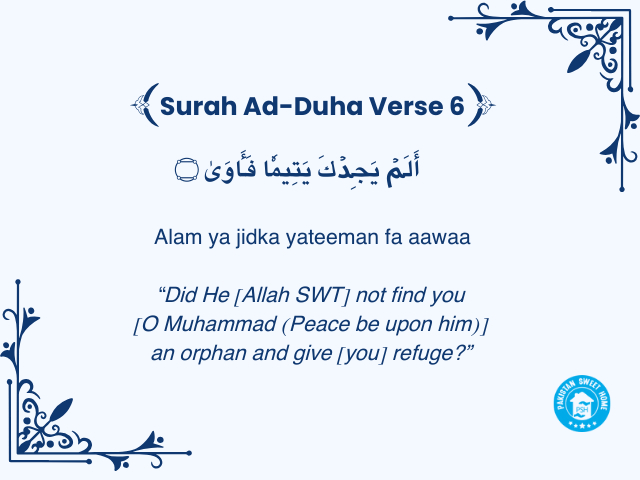
As he entered the world as an orphan, his journey was one of divine shelter and resilience. The Qur'an reminds us:
Desert Upbringing
In Arab tradition, young children were often sent to the desert to be raised by Bedouins. This practice helped children develop resilience and exposed them to purer Arabic. Muhammad (PBUH) was entrusted to Halima Sadia, a poor wet nurse with limited resources.
Despite the challenges of famine and drought, Halima, the first foster mother of the holy prophet (PBUH), accepted Him.
Prophet Muhammad's childhood miracles
Upon taking Muhammad (PBUH) into her care, Halima experienced a dramatic turnaround in fortune. Her previously barren camel began producing milk abundantly, and her herd flourished compared to others. Despite being an orphan, these miracles led Halima to believe that Muhammad (PBUH) was a blessed child.
Return to His Mother
After two years, Muhammad (PBUH) returned to his mother, Amina. However, Halima persuaded Amina to let Muhammad (PBUH) stay with her for another two years. She cited the blessings Muhammad (PBUH) had brought her and expressed concerns about an illness in Makkah.
During this period, a remarkable incident occurred. Angel Jibrael visited Muhammad (PBUH) and purified his heart, which was perceived as part of the shaytan (Satan) being removed.
Life with His Mother and Grandfather
Muhammad (PBUH) was soon returned to his mother, who reassured Halima that Muhammad (PBUH) was free from any evil influence. Tragically, Amina passed away before Muhammad (PBUH) turned six.
The young orphan was then taken under the care of his grandfather, Abdul Muttalib, who nurtured him with great affection. Abdul Muttalib also passed away two years later, entrusting Muhammad (PBUH) to his son Abu Talib.
Youth and Early Travels
After Abdul Muttalib, Abu Talib became the guardian of Muhammad (PBUH). He was a man of great honor and had a commanding presence. As the leader of Banu Hashim, he held the esteemed titles of the "Lord of Quraysh" and "Chief of the Valley." Like many in his tribe, he was a merchant, leading caravans that traveled to and from Syria and Yemen.
Abu Talib's caravans would depart from Makkah to various destinations in every trading season. Sometimes, he oversaw the sale and purchase of goods in foreign markets. It is said that when young Muhammad (PBUH) was twelve years old, He accompanied his uncle on one of these journeys to Syria.
From an early age, Muhammad (PBUH), the future Prophet, earned a reputation for his honesty, integrity, and sound judgment. Since there were no banks then, he became a trusted "banker" for the people of Makkah, safeguarding their money, jewelry, and valuables.
When they needed their possessions returned, he always did so with utmost reliability. This trustworthiness earned him the titles of al-Amin (trustworthy) and al-Sadiq (truthful).
First Marriage
Muhammad (PBUH) worked as a trader for Khadijah (R.A), a widow until they married in 595 CE when he was 25. Their marriage, which lasted 25 years, was reportedly a happy one. Muhammad (PBUH) remained devoted to Khadija and did not marry another woman during their union.
After her death, Khawla bint Hakim suggested that Muhammad (PBUH) marry either Sawda bint Zama, a Muslim widow, or Aisha, the daughter of Um Ruman and Abu Bakr. Muhammad (PBUH) then arranged to marry Sawdah bint Zam'ah in 619 and Aisha bint Abi Bakr in 623.
Maturity and Observations
Throughout his youth, Muhammad (PBUH) led a life of solitude and observed the moral decay and social unrest prevalent in Mecca. Despite the lawlessness, tribal conflicts, and widespread disbelief, he remained deeply affected by the societal conditions. He (PBUH) always reflected his sensitivity and concern for the well-being of his people.
The Battle of Fijar and Prophet Muhammad’s (PBUH) Role
At the age of fifteen, Prophet Muhammad (PBUH) was present during the Battle of Fijar. It was a conflict between the Quraysh tribe and the Hawazin tribe, fought during a sacred month in which warfare was forbidden.
Although He (PBUH) did not actively participate in combat, He (PBUH) played a supportive role by collecting and preparing arrows during the battle. His (PBUH) involvement in this conflict marked an early exposure to tribal warfare, known as Ayyam al-Arab.
These early experiences in both peace-building and conflict resolution shaped the Prophet’s (PBUH) leadership qualities. These experiences prepared him for his future role as a promoter of peace and justice.
Hilf al-Fudul and the Reconstruction of the Kaaba
During his early years, Prophet Muhammad (PBUH) was involved in significant events, demonstrating his peace-loving nature and conflict-resolution skills. One such instance was the Hilf al-Fudul, a peace treaty formed between the tribes of Makkah aimed at promoting justice and helping the poor and needy.
Prophet Muhammad (PBUH) was so pleased with this agreement that He (PBUH) later expressed His (PBUH) willingness to participate in similar treaties again. This highlighted His (PBUH) strong desire for peace and justice.
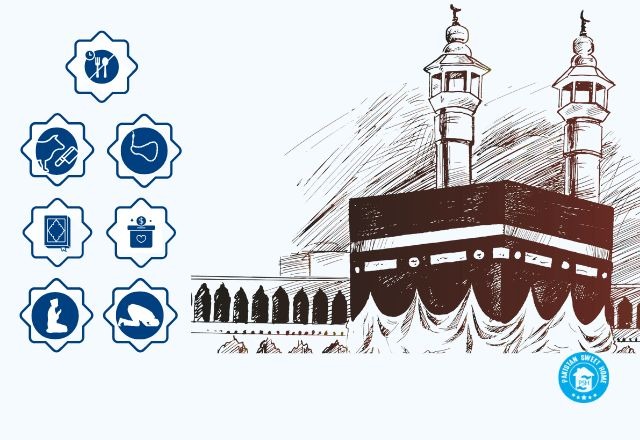
Another key event occurred when Prophet Muhammad (PBUH) was around thirty-five years old, during the reconstruction of the Kaaba after a flood. The tribes of Quraysh argued over who would have the honor of placing the Black Stone.
Using his wisdom, the Prophet (PBUH) suggested that the stone be placed on a cloth. This way allowed each tribe to lift the stone together, with the Prophet (PBUH) himself putting it in its final position. This incident showcased his skill in fostering unity and peaceful cooperation.
First Revelation and Prophethood
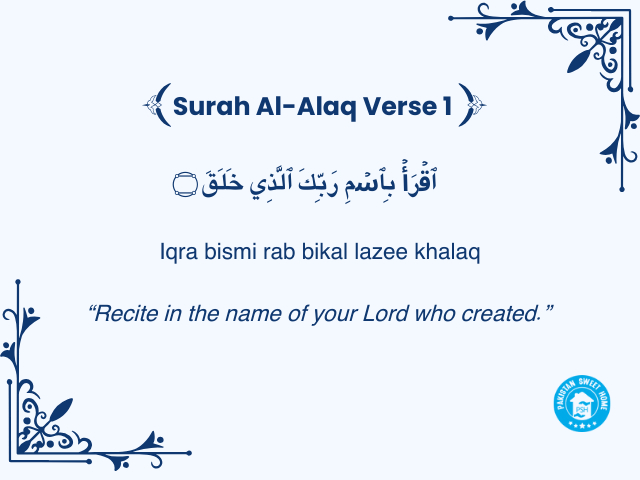
Muhammad (PBUH) developed a practice of solitary retreats, spending time in the mountains near Makkah to fast and meditate. In 610 CE, during one of these retreats in a cave on Mount Hira, he experienced a profound encounter.
Angel Jibrael came to him and told him that he was chosen as a prophet. He (PBUH) then delivered words of immense beauty and power, which Muhammad (PBUH) believed were from God.
The first experience with Angel Gabriel profoundly affected Muhammad (PBUH), and he initially kept it private, sharing it only with His (PBUH) wife Khadijah (RA). Over time, such encounters continued, and He (PBUH) was eventually commanded to share the divine messages with His (PBUH) tribe publicly.
In conclusion, the early life of the holy Prophet Muhammad (PBUH) is a testament to resilience and divine preparation.
From His (PBUH) birth in Makkah and the challenges of an orphaned childhood to His (PBUH) upbringing in the desert, each phase of His (PBUH) early years was significant. These experiences played a crucial role in shaping His (PBUH) character.
His (PBUH) involvement in the Battle of Fijar, the Hilf al-Fudul, and the reconstruction of the Kaaba highlights His (PBUH) leadership and commitment to justice. These foundational experiences set the stage for His (PBUH) future mission as a prophet.
Pakistan Sweet Home is an exemplary orphanage in Islamabad, offering a safe, supportive home to orphaned children from across the country. With a focus on quality education, healthcare, and emotional well-being, it ensures that every child is nurtured with love and dignity. This center stands as a beacon of hope, shaping brighter futures for those who need it most.
Ali Raza holds a Master of Arts in Islamic Studies and is an expert in Islamic theology and jurisprudence. Specializing in Zakat, Sadaqah, and other Islamic donations, Ali's writings provide valuable insights into the religious and ethical aspects of charity. His work for Pakistan Sweet Homes aims to educate and inspire readers to support orphan care and charitable initiatives, making him a key contributor to the organization's mission.