What is Iftar in Islam?
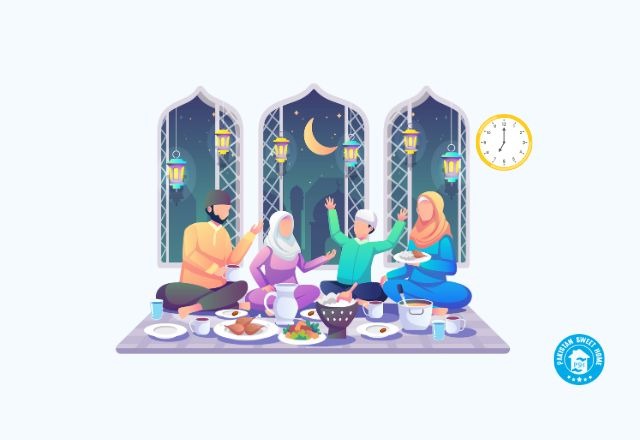
Iftar is the meal Muslims eat to break their fast at sunset during Ramadan. It typically starts with dates and water and is observed at the time of the Maghrib prayer. This daily ritual is both spiritual and communal, signifying gratitude and reflection after a day of devotion and self-restraint.
Iftar (إفطار) is derived from the Arabic root فطر (fatara), which means to split or break apart. In common usage, إفطار (Iftaar) specifically refers to the act of breaking the fast.
Iftar's meaning in English is to “break the fast.” It is the special meal Muslims have after sunset during the holy month of Ramadan to end their daily fast. This meal is a significant part of Ramadan, symbolizing the completion of a day of fasting and the beginning of the evening's nourishment and reflection.
Iftar Time
The Iftar time is crucial in the practice of fasting during Ramadan. Iftar begins at sunset, as soon as the adhan (call to prayer) for Maghrib is heard. This time varies daily and depends on the geographical location, as sunset occurs at different times across the world.
Many Muslims consult local prayer timetables or apps to determine the exact time for Iftar each day.
Umar (Allah be pleased with him) reported Allah's Messenger (may peace be upon him) as saying:
“When the night approaches and the day retreats and the sun sinks down, then the observer of the fast should break it.”
(Kitab al-Sawm: Sahih Muslim 2421)
City | Iftar Time (approx.) |
Islamabad | 6:55 PM |
Lahore | 6:58 PM |
Karachi | 7:10 PM |
Peshawar | 7:00 PM |
Quetta | 7:12 PM |
Tip: Always follow your local prayer timetable or mosque announcements for precise timing.
Significance of Iftar
Iftar is a meal of immense spiritual significance in Islam. It marks the moment when Muslims break their fast at sunset during the holy month of Ramadan. The Prophet Muhammad (peace be upon him) encouraged Muslims to hasten in breaking their fast, as this act is highly rewarded.
The Prophet Muhammad (Peace be upon him) said,
"The people will remain on the right path as long as they hasten the breaking of the fast."
(Sahih al-Bukhari 1957)
This nutritious meal is not just a physical necessity after a day of fasting but also a time of gratitude, reflection, and connection with Allah (SWT).
Gratitude and Reflection
The time of Iftar is a moment to express deep gratitude to Allah (SWT) for the strength to complete the day’s fast. It’s an opportunity to reflect on the blessings of food and drink that many might take for granted. As we break our fast, we are reminded of those who go without, fostering empathy and compassion in our hearts.
Community and Connection
Iftar is often shared with family, friends, and the wider community, making it a time of unity and togetherness.
Whether at home, in a mosque, or at a communal gathering, the act of breaking fast together strengthens bonds and reinforces the spirit of brotherhood and sisterhood in Islam. This communal aspect of Iftar is a powerful reminder of the importance of sharing and supporting one another, particularly during Ramadan.
Spiritual Fulfillment
Breaking the fast with Iftar is also a time for spiritual fulfillment. After a day of fasting, the first sip of water or bite of food is accompanied by a sense of peace and contentment.
This moment is often followed by the Maghrib prayer, which provides an opportunity to thank Allah (SWT) for His blessings and to seek His continued guidance and mercy.
Discipline and Patience
Observing Iftar after a day of fasting demonstrates discipline and patience. Despite the hunger and thirst experienced throughout the day, Muslims wait until the exact moment of sunset to break their fast.
This practice reinforces the values of self-control and obedience to Allah (SWT), which are key aspects of the spiritual journey during Ramadan.
Following the Sunnah
Eating dates to break the fast at Iftar is a Sunnah of the Prophet Muhammad (peace be upon him). Dates provide a quick source of energy and are a nutritious way to begin the meal.
This simple act connects us with the traditions of the Prophet and adds a spiritual dimension to the physical act of eating.
Global Unity
The timing of Iftar is a shared experience for Muslims around the world. Despite differences in time zones and cultures, the act of breaking the fast unites the global Muslim community in a collective moment of devotion and gratitude.
This global connection is a testament to the universality of Islamic teachings and the shared experience of Ramadan across different cultures and regions.
Iftar Benefits
Here are the spiritual, physical, educational, cultural, and social benefits of the iftar.
1. Spiritual Benefits
Iftar offers a profound spiritual uplift, allowing individuals to deepen their connection with Allah (SWT). It provides a moment of gratitude and reflection after a day of fasting, reinforcing one's faith and devotion.
The act of breaking the fast serves as a reminder of the virtues of self-control and patience, key aspects of Islamic teaching. Additionally, sharing Iftar with others strengthens communal bonds, fostering a sense of unity and belonging.
2. Physical Benefits
Physically, Iftar restores energy and nutrients that have been depleted during the day, helping to maintain overall health and well-being. Breaking the fast with dates and water is particularly beneficial for digestion, preventing issues like bloating and discomfort.
Rehydrating after a day of fasting is crucial for bodily functions, ensuring that one stays hydrated and energized.
3. Educational Benefits
Iftar serves as an educational experience, teaching valuable lessons in self-discipline and the importance of moderation. The preparation and timing of Iftar encourage responsibility and time management. Furthermore, understanding and appreciating the experience of fasting can foster empathy toward those who are less fortunate.
4. Cultural Benefits
Culturally, Iftar plays a vital role in preserving and celebrating religious traditions and heritage. It provides a platform for cultural exchange, bringing together diverse groups to share and appreciate each other’s customs.
The variety of traditional dishes enjoyed during Iftar reflects the rich cultural tapestry of Ramadan. This enriches cultural experiences and fosters a deeper understanding of different traditions.
5. Social Benefits
Socially, Iftar gatherings build strong community bonds, offering opportunities for social interaction and relationship building. The practice of providing Iftar to those in need promotes a spirit of charity and social responsibility.
Additionally, sharing Iftar with family and friends nurtures close relationships, creating memorable experiences and reinforcing family ties.
Don’t Delay Maghrib Prayer
Many Muslims delay the Maghrib prayer while eating Iftar, but it’s essential to avoid this. To maintain the true essence of Salah and stay focused, it’s better to eat a light portion before prayer and offer it promptly.
This approach allows you to pray with full concentration and devotion. Afterward, you can continue your meal without compromising the spiritual experience of your worship.
Hadiths About Iftar Openings
Here are five hadiths highlighting the benefits of opening the fasts of others and why you shouldn’t miss out on their blessings.
Multiply Your Rewards
The Prophet Muhammad (peace be upon him) said,
“Whoever provides Iftar for someone breaking their fast will receive the same reward as the fasting person, without diminishing the fasting person’s reward.”
[Tirmidhi]
This demonstrates Allah’s immense mercy and generosity. By giving food for suhoor or iftar, you not only allow others to participate in Ramadan’s blessings but also increase the reward of your own fast.
This is a great opportunity to involve young children by letting them help prepare Iftar or contribute their pocket money towards feeding those in need.
Accessible Rewards
You don’t need to host large Iftar dinners or donate significant amounts to gain rewards.
The Messenger of Allah (peace be upon him) said,
“Save yourselves from the Fire even if it is with half a date, and if you cannot find that, then save yourselves by saying a good word.”
[Sahih al-Muslim]
Even a small act of giving Iftar, like providing a drink of water, is valued.
The Prophet’s Promise
Many find the thirst of Ramadan challenging, so the Prophet’s promise of never feeling thirsty again is particularly motivating. By providing Iftar, you may earn the reward of drinking from the Prophet’s fountain on the Day of Judgment.
The Prophet Muhammad (peace be upon him) said,
"And whoever gives [in Ramadan] to a fasting person water to drink, Allah shall grant that giver a drink from my fountain, such a drink where that person shall never again feel thirsty until he enters Paradise."
[Ibn Khuzaimah]
Joy for the Observer of Fast
Abu Huraira and Abu Sa'id (Allah be pleased with both of them) reported Allah's Messenger (peace be upon him) said:
"Allah, the Exalted and Majestic, said: Fast (is exclusively) meant for Me and I would give its reward. There are two (occasions) of joy for the observer of fast.
He feels joy when he breaks the fast and he is happy when he meets Allah.
By Allah in Whose Hand is the life of Muhammad, the breath of the observer of fast is sweeter to Allah than the fragrance of musk."
(Sahih al-Muslim: 214)
Sunnah About Iftar Openings
Following the Sunnah of the Prophet (peace be upon him), the proper way to begin Iftar carries both spiritual and practical significance.
Let's explore the recommended practices for opening the fast.
Hurry to Break the Fast
Following the Sunnah of the Prophet (peace be upon him), it is recommended that you break fast promptly.
He (peace be upon him) said:
“The people will continue to be fine so long as they hasten to break the fast.”
(Narrated by Bukhari and Muslim)
Food for Breaking the Fast
In a hadith, as narrated by Anas (R.A.),
“The Messenger of Allah (peace be upon him.) used to break his fast with fresh dates before praying; if there were no (fresh dates) then with dry dates, and if there were no (dried dates) then he would take a few sips of water.”
Narrated by Abu Dawood and Tirmidhi. It has been classed as Hasan in al-Irwa.
Iftar Dua
There is dua before iftar. Before taking the first bite of food, one should start by saying "Bismillah" (In the name of Allah).
The supplication for breaking the fast, as reported from the Prophet (peace be upon him), is:
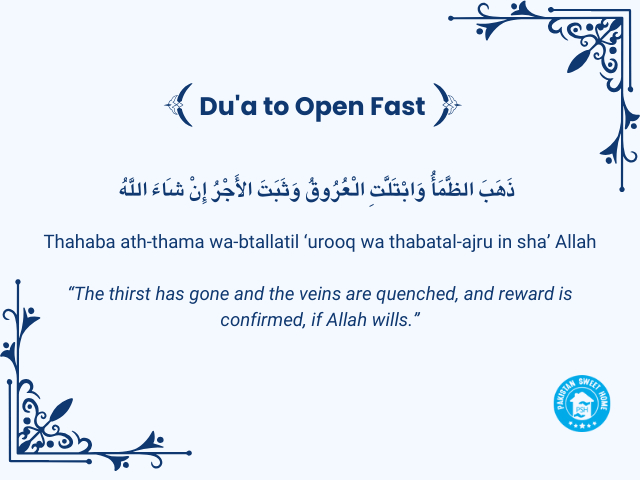
Note: There is no dua after iftar; one should say Alhamdulillah after breaking the fast.
Iftar Traditions Around the World
- Middle East: Dates and laban (yogurt drink), lentil soup, and stuffed vine leaves are common starters.
- Turkey: Iftar often begins with olives, dates, and soup, followed by pide (flatbread) and grilled meats.
- Indonesia: Sweet drinks like “kolak” and snacks such as fried bananas precede the main meal.
- Pakistan & India: Samosas, pakoras, fruit chaat, and sharbat are popular choices, followed by biryani or roti-based meals.
- UK & USA: Multicultural gatherings often feature a fusion of Middle Eastern, South Asian, and Western foods.
In conclusion, understanding what Iftar is goes beyond being just a meal to break the fast; it’s a spiritually significant moment that fosters community and reflection. Guided by the Sunnah and enriched by hadiths, Iftar offers profound blessings and rewards.
By embracing its rituals and reciting the prescribed dua, we deepen our connection with Allah (SWT) and strengthen the bonds of unity during Ramadan. Different countries have different cuisines for iftar.
With years of impactful service, Pakistan Sweet Home has redefined what it means to care for orphaned children. Sponsoring an orphan helps ensure continuity in education, values-based upbringing, and participation in extracurricular activities. This form of support builds strong individuals who are prepared to contribute positively to their communities and beyond.
Give Orphans the Chance They Deserve