Have you ever thought about why people help others?
Maybe you've a desire to give money, lend a hand, or spend time with those in need. If so, you've stepped into the world of charity!
But what is charity, exactly?
Charity isn't just about giving things away; it's about creating change. It's giving without expecting anything in return, spreading hope and kindness wherever you go.
Let's dive deeper into what charity is all about:
Different Types of Charity Giving
Charitable giving means willingly giving something valuable to help a cause or group that serves the public interest.
Charitable giving comes in various forms, including:
- Giving money: cash, checks, credit cards, or online payments
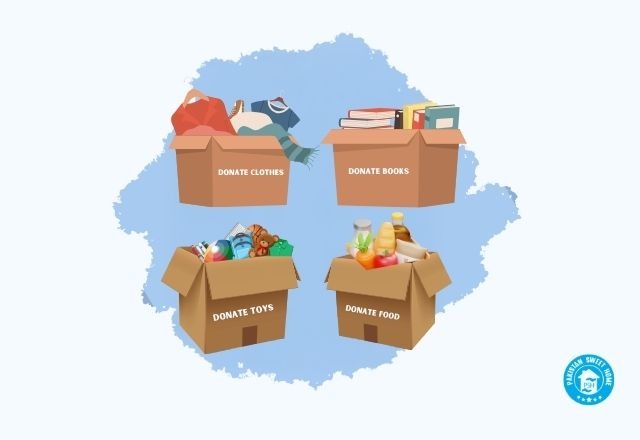
- Donating goods: clothes, books, food, or furniture
- Offering services: volunteering, tutoring, mentoring, or counseling
- Contributing assets: stocks, bonds, real estate, or vehicles
There are also many other types of charity, each serving a specific cause.
Here are some other examples:
- Arts and Culture: Supports artistic and cultural development.
- Human and Civil Rights: Defends civil rights and promotes change.
- Religion: Supports religious activities and worship.
- Community Development: Promotes economic growth and stability, like affordable housing.
- Environment: Preserves and protects the environment through research.
- Education: Provides opportunities for effective and accessible schooling.
- Health: Promotes treatment, prevention, and medical research.
- International: Works for peace & human rights and provides aid.
- Animals: Protects and helps animals and their habitats.
- Human Services: Provides services for people in need, like food banks and shelters.
Ways of Charity
You don't need lots of money to help a charity. There are many ways of charity. You can give a little or a lot. Giving isn't just about money.
You can also:
- Help at places like soup kitchens or animal shelters
- Use your skills to help, like building homes
- Give things like clothes or furniture
- Collect donations
- Raise funds
- Donate to an Orphanage like Pakistan Sweet Home
- See if your job matches donations
- Give your tax refund
- Give gifts
- Give your credit card rewards
- Use a credit card that helps charities
- Donate blood
Deciding how much to give is up to you, but about 2-6% of your income is common. Giving doesn't always mean money. It could be something big, like donating blood.
Reasons Behind Giving Charity
People give charity for different reasons. Some common ones include:
Altruism: Wanting to help others or make the world better
Empathy: Understanding and sharing others' feelings
Religious beliefs: Beliefs that encourage or mandate giving
Social norms: Following the expected behaviors in a group or society
Tax benefits: Getting charity tax benefits, which means paying less in taxes
Reputation: Caring about how others see or think of you
Effect of Charitable Giving on Your Finances
Giving to charity can also help you financially, especially if you plan it well.
Here are some benefits of charity on your finances:
- It can reduce the amount of income you have to pay taxes on.
- Your charity donations can increase the amount you can subtract from your taxes or get back as refunds.
- Donating can also lower the taxes your estate may have to pay on the property or assets you leave behind when you die.
However, these benefits depend on different things, like how much you give, the way you give, and when you give. It also depends on the type of charity or organization and the rules in your area. So, it's a good idea to talk to a tax expert or use a reliable online tool to figure out and claim your tax benefits.
Understanding Foundations vs Charities vs Nonprofits
Here are the major differences between foundations, charities, and non-profits:
Aspects | Foundations | Charities | Nonprofits |
Definition
| Created by a single benefactor, usually an individual or a business | Organizations operating for religious, charitable, scientific, educational, or other specific purposes | Organizations are driven by a dedication to a given cause without a profit motive
|
Nature | All private foundations are nonprofit organizations | All charities are nonprofit organizations | Not all nonprofits are charities |
Funding | Supported by a single, large endowment | Supported by continual donations and grants. Must receive a portion of contributions from the public | Supported by continual donations, fundraising, and grants |
Tax Rules | Must meet certain criteria related to charitable, religious, educational, scientific, literary, and other purposes | Must meet criteria related to charitable, religious, educational, and other purposes | Must meet criteria related to charitable, religious, educational, and other purposes |
Grants | Gives grants to charitable trusts | Receives grants to further its mission | Receives grants to further its mission |
Spending Requirements | Must distribute 5% of its assets annually | None | None |
Difference Between Charity and Philanthropy
Charity and philanthropy are often confused, yet they have the following distinct differences:
What is Charity?
Charity is an immediate response to a situation, often driven by emotion, aiming to provide short-term aid.
Characteristics of charity:
- Emotional response
- Short-term focus
- Immediate positive impact
- Often involves individual acts of kindness
- Responds to urgent needs
Example:
During a natural disaster, individuals may donate money or volunteer time to provide immediate relief to affected communities.
What is Philanthropy?
Philanthropy addresses the root causes of social issues through a strategic, long-term approach.
Characteristics:
- Strategic planning
- Long-term focus
- Systemic change
- This may involve collaboration with organizations or institutions to address complex issues
- Seeks to prevent future problems and create sustainable solutions.
Example:
Philanthropists may fund research, advocate for policy changes, or support community development projects. These efforts aim to address underlying issues contributing to poverty or inequality.
Impact of Charity on Society
Charity work brings about positive effects on the well-being, happiness, and health of both donors and recipients.
Here are some of the benefits:
- The warm glow effect: This refers to the feeling of satisfaction or joy experienced when giving to others.
- The helper's high: Giving can provide a boost of energy or improve mood, known as the helper's high.
- The happiness paradox: Research suggests that giving to others can bring more happiness than spending on oneself.
- The gratitude effect: Receiving or acknowledging a gift can evoke feelings of appreciation or thankfulness.
- Social connection: Giving fosters bonds and relationships between givers, receivers, and causes or organizations.
Numerous studies and anecdotes support these benefits. For instance, one study revealed that individuals who donate to charity reported higher happiness levels than those who spent the same amount on themselves.
As a result, many companies have implemented charitable giving programs. These programs encourage employees to participate by donating their time or offering financial contributions to charities.
According to the hadith about giving charity, narrated by Abu Huraira,
The Prophet (p.b.u.h) said, "The best charity is that which is practiced by a wealthy person. And start giving first to your dependents."
(Volume 2, Book 24, Number 507, Sahi al-Bukhari)
In wrapping up, understanding what is charity goes beyond just giving money — it’s about helping others through time, resources, or compassion. Charity can be expressed in many ways, from volunteering to donating essentials or supporting causes like education and healthcare.
Various types of charity address different needs in society. Foundations, charities, and nonprofits may differ in structure, but all aim to serve the greater good. While charity offers short-term relief, philanthropy focuses on long-term impact. Ultimately, charity builds stronger, kinder, and more connected communities.
Pakistan Sweet Home, an orphanage NGO, is dedicated to the welfare of orphaned children across Pakistan. It provides them with food, shelter, education, health care, and most importantly, a sense of belonging. As a trusted NGO, Pakistan Sweet Home relies on donations to continue its mission of hope.
Spread Love and Hope Among Orphans